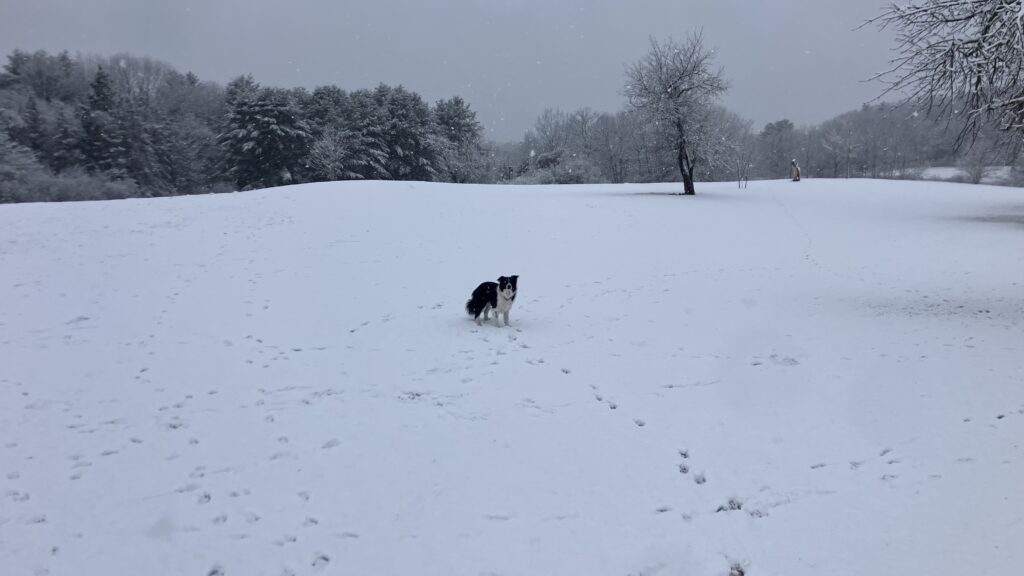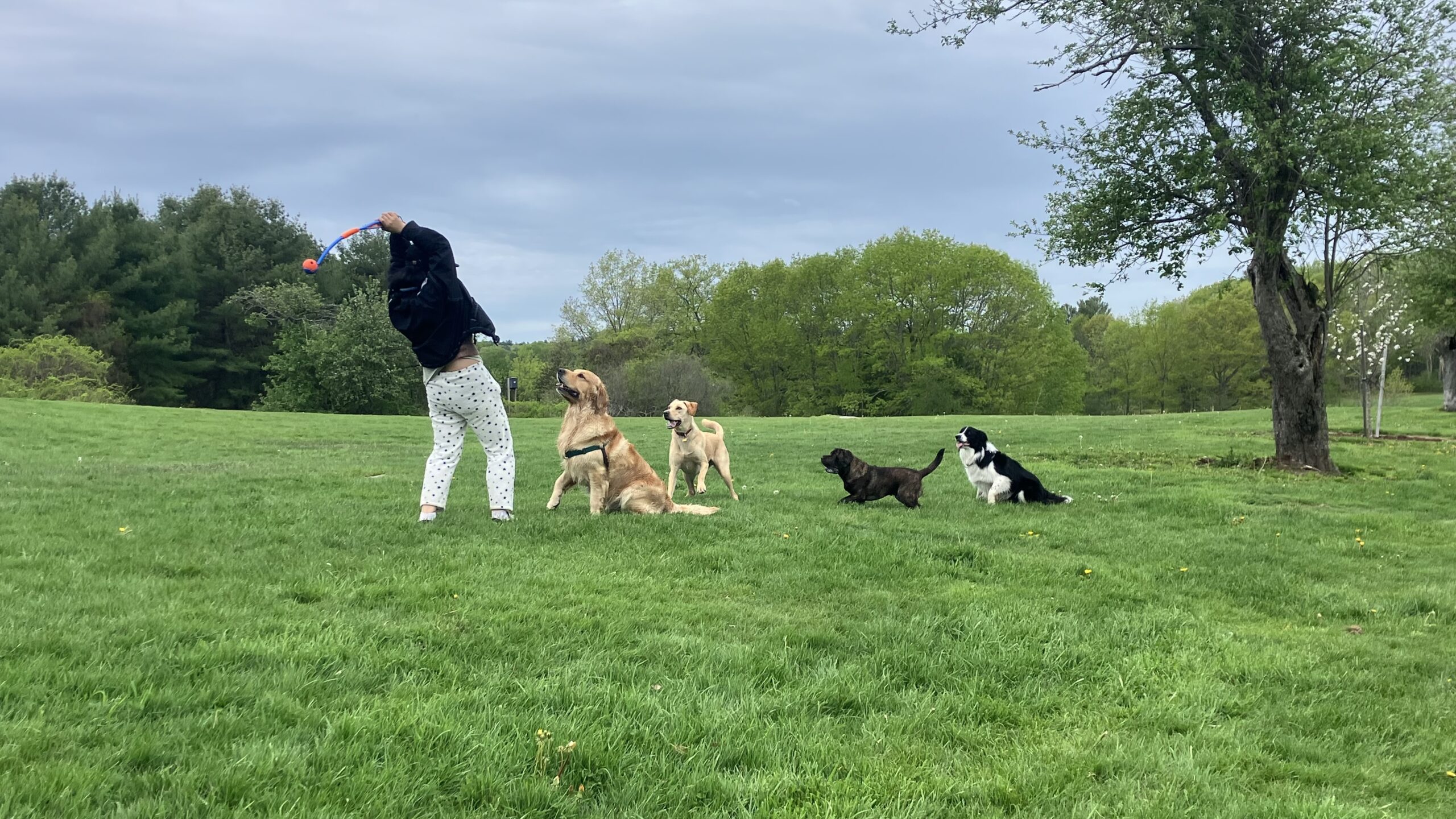
The first time I was traveling in the south with the dog, I was delighted to see dog parks advertised as a regular feature at gas stations and travel stops along the highway. That’s something we just didn’t have in the north, and it seemed like a kind and wonderful idea – dedicated safe places to exercise and play with your dog as you traveled.
The truth of gas station dog parks is different, though, and my enthusiasm dimmed quickly. They are small squares of fenced grass that are over-used and under-maintained, so they quickly become filthy. In practice, they’re just uncleaned toilets for dogs, and many end up being health hazards to both the dogs and the people who set foot in them.
It’s not that a gas station dog park is a bad idea, but of all the things a busy travel stop has to manage, it’s not surprising that few resources are left for managing and cleaning facilities for dogs.
The alternative – to have no facilities for dogs at all – is bad too, since something like half of American households have dogs. Places for people to eat and relax and relieve themselves are built in to our transportation landscape, but if you’re part of the half-of-all-people who have a dog, then often the dog is left to defecate on the pavement, the side of the trash can, in the alley, or in the trash-filled ditch – whatever you can figure out. You don’t have much choice, because you’re traveling and don’t know the area; you don’t have a backyard to take them to. It’s not a sensible or responsible system. In that sense, a “dog park” at least represents an effort being made.
The other thing that grew to bother me about those little fenced in squares of grass or dirt was the inside-outness of it. If the place where your dog is allowed is one small postage stamp of filthy ground with a fence around it, then the message is that everything outside the fence – which is to say, the whole world, the whole Earth – is not theirs. The rest of the world belongs to the machines, to the asphalt, to speed and death and leash laws. The rest of the world is Not Safe.
If it’s not good for dogs, this rest of the world that they are banned from, then how likely is it that it’s good for people?
The world was once theirs. Some 30,000 years ago, they entered into a deal with us, different than any of the other animals who later found themselves domesticated. Dogs were the first, and they entered into the domestication deal willingly, in partnership with us. There is a theory that we learned how to hunt in groups by watching wolves, and that changed us forever. They lent us some of their skills and abilities, and we lent them some of ours.
The exact terms of the pact that was made between our species has been lost to time, but it’s a safe bet that being pushed into near-microscopic fenced dog-reservations wasn’t part of the deal, nor was living indoors in stale, dim cubes cut off from the natural world of light and smells, nor was being shackled to our sides 24 hours a day.
We have forgotten how the pact was supposed to work, but they haven’t. They try to show us every day how it is supposed to be.
Let’s go outside. Let’s run through the fields, under the sun, and feel the wind on our faces. Let’s do something together. It will be awesome.
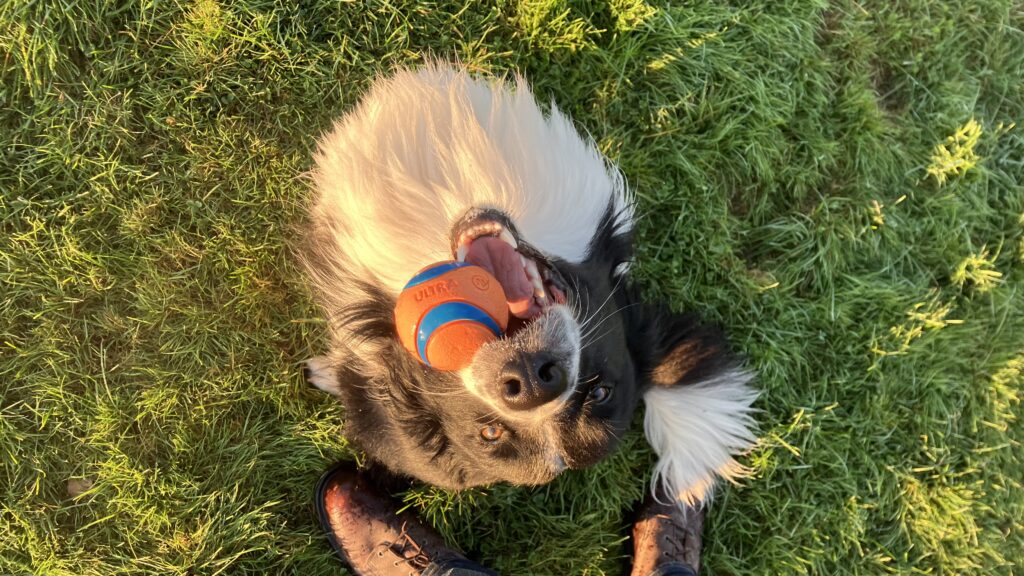
Even off the highway, America is lacking. Louis and I have driven back and forth across the country together several times, and it’s a litany of signs and warnings: No Dogs Allowed, No Dogs Off Leash, extra fees if you have a dog with you. No dogs allowed at the national parks we’ve visited. Traveling alone with him, I often found myself surrounded by breathtaking natural beauty into which he was not allowed, even on leash, which led to me speed-touring natural wonders while he remained alone in the car, counting the minutes that it seemed safe to leave him locked in his car-prison while I gawped at the great outdoors by myself. It felt completely backwards.
We stayed in one beautiful town in the Rockies where two separate people told us what a dog-friendly place it was, but when asked where we could go so he could get a good run in, they stared at me, puzzled. There was no such place.
At these times, I’d remember fondly the dog places we have on the New Hampshire Seacoast, and I’d tell people about Wagon Hill Farm.
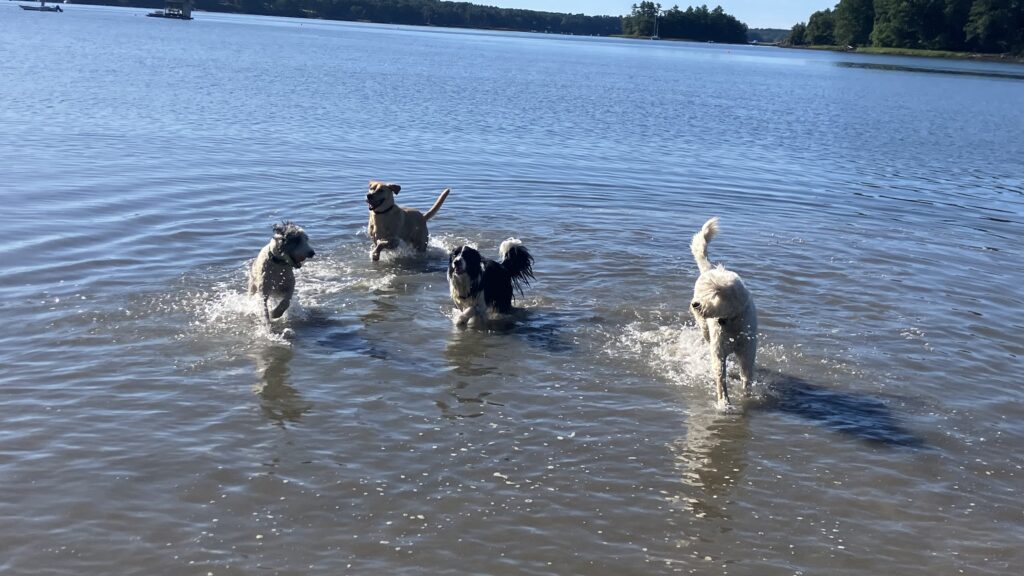
Wagon Hill Farm has all these different zones: a mowed field for running and playing catch, woods with trails, a vast unmowed meadow with paths cut through it, and Great Bay to swim in and cool off.
It’s large enough – many acres – so that different dogs and people can find their own groups, or even keep to themselves. If you like to play fetch, other fetch dogs will find you; if you like to play chase, you’ll find dogs that like that; or if you like to wrestle, you’ll find a partner soon enough.
It’s only off leash from dawn until 10 am, but that’s enough for there to be a regular group of people and dogs who get used to each other and learn from each other. Dogs go to Wagon Hill farm to become socialized and become better at meeting and interacting with new dogs — to become better dogs — and people learn from other dog owners how to be better at managing their own dog.
People form friendships, and so do the dogs, meeting up with their dog-friends day after day. There are few happier sights than watching happy, well-adjusted dogs playing together with other dogs they know on a beautiful day next to Great Bay.
Louis’ first dog-friend was Ollie, an Australian Shepherd who thinks he’s the mayor of Wagon Hill Farm. Ollie’s person, Suzy, has a birthday party for him every year in their backyard, and she invites other dogs from Ollie’s life – some from Wagon Hill Farm time, some neighbors, others from other parts of their lives. We’ve gone to a few of these parties, and they are utterly ridiculous and delightful – cake made of hamburger, party hats, an obstacle course. Everyone laughs and the dogs have a blast.
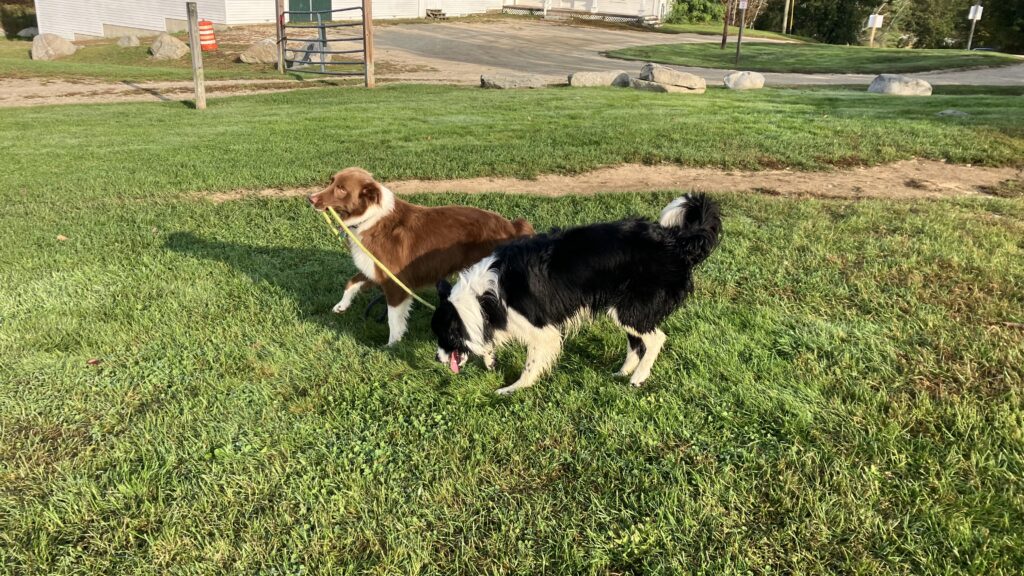
Louis wouldn’t be the extraordinarily social dog that he is without Wagon Hill Farm, and I wouldn’t be the person I am, either. There have been stretches of time when we’ve been there every morning, and it is almost invariably the best part of our day. Over the past four years, we’ve spent hundreds of mornings there. There is little better than time outside, engaged in physical activity, in community with other people and animals, learning.
I’ve often thought I could write a page a day just on what I saw and learned from watching the dogs there that day. I regret that I have rarely done so.
Wagon Hill Farm is a gem, a little slice of near-utopia in an otherwise mostly-disappointing world.
And then there’s this, a post from the town of Durham, New Hampshire on Facebook:
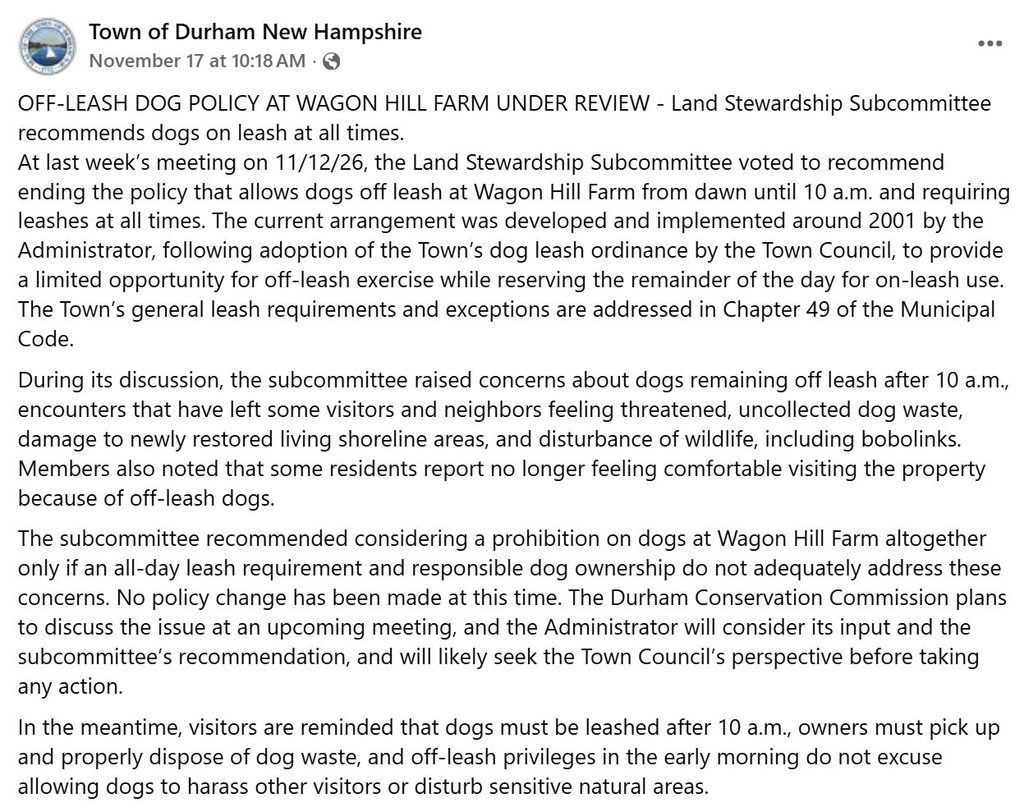
It’s head-spinning when you learn that something you regard as an absolute good is something others believe should be destroyed.
It was interesting to me that this off-leash time was created at the same time the town first instituted a universal, town-wide leash law in 2001. This was the deal made so that dogs and their people would still have a resource for open, free activities in town. The dogs lost the town, but were given this narrow slice of time at this one spot as a compromise. Now the town was moving to eradicate even this. The half-of-all-households who have dogs would get no town resources at all; people with dogs, it would seem, are somehow less-than dogless people, who would now control everything all the time if this goes through.
When we were traveling in Florida and struggling to find places we could get outside together, people told us about Fort De Soto, a beach park on the edge of St. Petersburg that contains more than a thousand acres and stretches across five keys. Even more than that, it has a designated dog beach.
We drove 45 minutes to get there, and found a perfect white sand beach and gorgeous blue Gulf water, and dogs and people cavorting in and out of the waves. It was beautiful. The beach wins awards, and the dog beach in particular makes it on lists as one of the best dog parks in America.
But we were there early in the morning, and as the day got brighter the beach quickly became crowded. In truth, the dog beach is only a few hundred yards long, and the other three miles of award-winning white sand beaches at De Soto Park allow no dogs at all, not even on leash. The greater St. Petersburg area holds more than 3 million people, so these dogs and people on the beach were all strangers to each other, and the beach got more and more packed. Soon, the stress of navigating hundreds of dog-greetings, one after another, became simply not worth the effort.
Most beaches in Florida don’t allow dogs, nor do most outdoor spaces. While at first blush a small dog beach like the one at De Soto seems like such a blessing, it quickly reveals itself as a kind of dog-ghetto. By creating a very small space where dogs are allowed, planners give themselves license to ban dogs from all the rest of the coast, all the rest of the public spaces, from the outdoors itself. Everyone with a dog on the sprawling, overdeveloped coastline of Florida is then forced into these few, small “dogs allowed” spaces, and it ends up feeling not so different from those little fenced-in squares of land at the gas station.
And by extension, as someone traveling with a dog, I am also effectively banned from those other three miles of sprawling, wide-open white sand beaches at De Soto Park.
I’m not saying that dogs should run loose on every acre of America. That world is gone. The world we have made is unsafe for animals most of the time, so steps need to be taken for their own protection regardless of other concerns. But the small snippets of spaces designated for dogs and people to use together are far, far from being representative of the much-larger role dogs have in the lives of the general population. If the dogged were a voting block, our voice would be thunderous and unmistakable, but for some reason, the un-dogged have been running the world and making the rules.
The town of Durham already went through the ghettoization of dog ownership 25 years ago, and the result was those few hours a day set aside for dogs and people at Wagon Hill Farm. Now they are looking to just eliminate it entirely.
It’s hard to make sense of the arguments sprinkled through the post.
It says neighbors feel threatened, but there are no neighbors; the park is surrounded by water on three sides, with a big fence on the other protecting it from the busy road.
It says visitors feel threatened, but in the hundreds of mornings when we have been there, I have never seen a dog threaten a person, never once, never anything even close. If that were to happen, it would be an issue for animal control or the police, not a blanket indictment of the ~90 million dogs in America.
It says that people don’t obey the leash law during the leashed hours. If there are such people, then punishing the vast majority of people who are following the rules doesn’t help with the scofflaws, so that’s just fuzzy thinking, just tossing in more grievances to muddy the conversation. But I’ve never seen anyone break the rules, anyway — every day at 10 am, people pack up and leave, or leash their dogs, like clockwork.
Then there is the classic complaint that people don’t clean up after their dogs.
Well, they do. Just go and watch them. It is a conscientious and appreciative community. And if you run out of waste bags, someone will offer you one.
But it only takes one pile of dogshit to get this complaint rolling. The standard of absolute, pristine perfection that we hold dog owners to is different than the standards we have for other groups in other public spaces.
Managing public spaces is hard, and requires effort. Every campsite in America has beer cans and wads of toilet paper strewn about, and every highway has plastic bags stuffed with dirty diapers tossed in the margin, but our solution isn’t to shut them all down. When we find a gummy Happy Meal box covered in ants at the playground, we don’t ban children. It’s just part of the cost of use in that type of space, and it is up to the community to manage it.
This, and the complaint about effects on the land, are tied together. Dogs don’t go into the fenced-in shoreline area, because it is fenced-in and protected. When a ball bounces over the fence into the shore grass, neither dogs nor people can figure out how to get it. The fence works.
But the park does see heavy use. It is not a wilderness. It is on a busy road, it has a parking lot and portable toilets, and it has another road right through the middle that goes to a boat landing. It has an extensive trail network.
A 20 – 60 lb dog with nature-made paws has far less impact on soil than a 115 – 250 lb human wearing shoes or boots.
Still, public land use is up since COVID-19. We were all forced outside, and we liked it. And that’s a good thing. It does, however, increase the stresses on our public spaces.
The dog-walking community at Wagon Hill Farm is probably the largest group of users at the park, and certainly the most consistent. It surprises me that they are regarded as a pest to be removed, rather than the primary constituents that the park is serving, and a loyal resource to be tapped.
A friend of mine pointed out that, if anything, Wagon Hill Farm is such a healthy and robust example of a multi-use conservation space, it should be seen as a model to be emulated in other places around Great Bay.
That’s a world I’d like to live in.